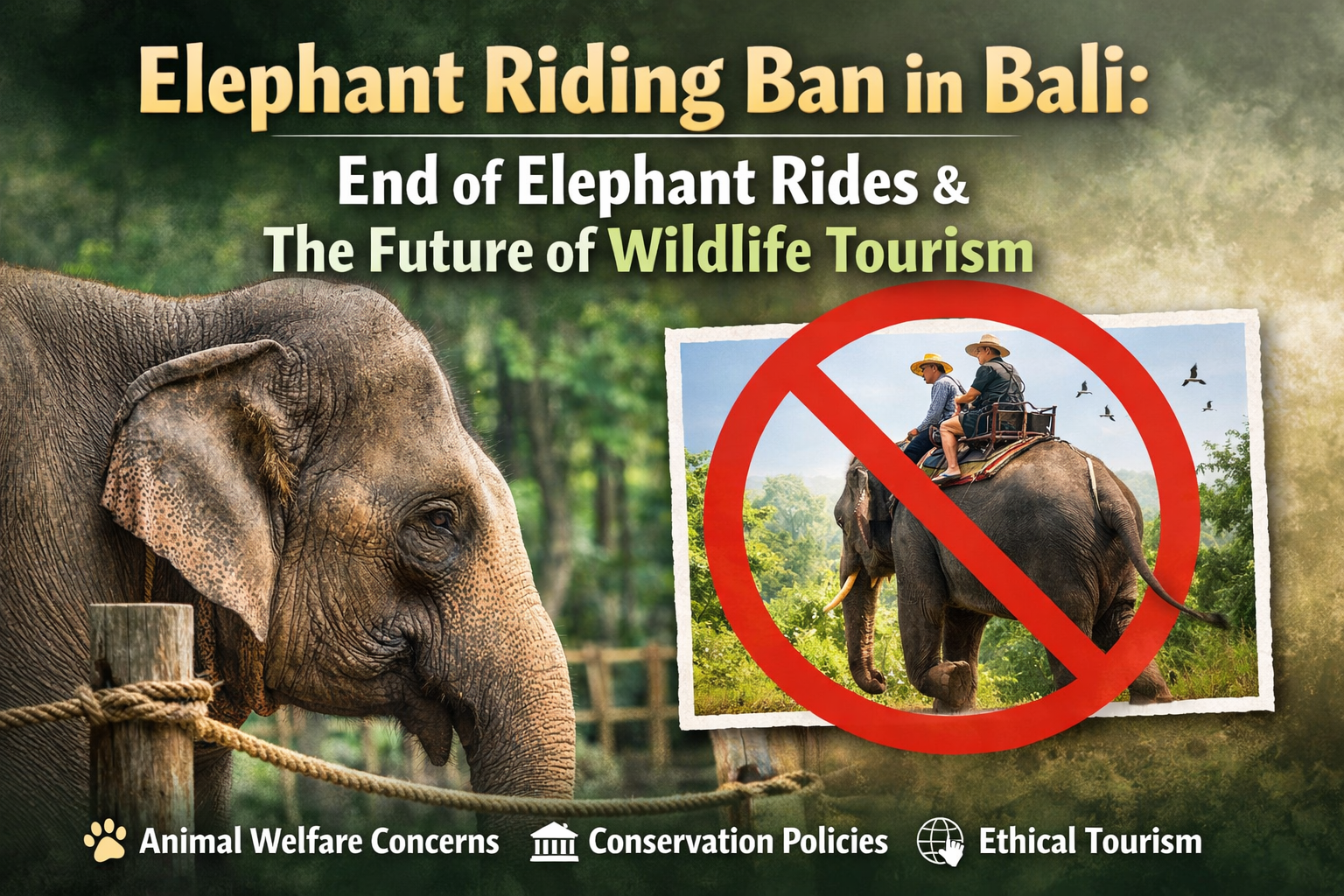
The elephant riding ban in Bali marks a significant shift in the island’s tourism industry. For years, elephant rides were promoted as one of Bali’s unique wildlife attractions. However, increasing awareness about animal welfare has led authorities and several wildlife parks to officially discontinue the activity.
This decision reflects a broader transformation toward ethical and sustainable tourism in Bali.
Why Has Elephant Riding Been Banned in Bali?
The ban follows a directive from Indonesia’s Directorate General of Natural Resources and Ecosystem Conservation (KSDAE), with enforcement monitored by BKSDA Bali (Natural Resources Conservation Agency).
Under the new regulation, facilities are no longer allowed to offer elephant riding experiences for commercial tourism purposes. Operators are encouraged to transition toward:
- Observation-based experiences
- Educational conservation programs
- Improved animal welfare standards
The goal is to prioritize the physical and psychological well-being of elephants.
Animal Welfare Concerns Behind the Ban
Elephants are highly intelligent and emotionally complex animals. Animal welfare organizations have long argued that elephant riding can cause:
- Spinal stress due to carrying heavy saddles and multiple riders
- Long working hours in hot weather
- Harsh training methods to control behavior
- Long-term psychological stress
As global tourism standards evolve, more destinations are moving away from wildlife entertainment toward conservation-focused models.
Wildlife Parks That Have Ended Elephant Riding
Several well-known facilities in Bali have stopped offering elephant rides and are shifting their focus toward conservation and education.
These changes demonstrate Bali’s commitment to aligning with international ethical tourism standards and responding to growing global awareness among travelers.
How This Impacts Bali Tourism
Positive Impacts
- Stronger reputation as a responsible tourism destination
- Increased appeal to environmentally conscious travelers
- Improved animal welfare standards
- Long-term sustainability of wildlife tourism
Business Challenges
Some operators have had to redesign their visitor experience models. However, many are now offering alternative programs such as guided tours, educational talks, and close-up observation without physical interaction.
Ethical Alternatives for Visitors in Bali
Travelers visiting Bali can still enjoy meaningful wildlife experiences without harming animals. Ethical options include:
- Observing elephants from a respectful distance
- Participating in conservation education sessions
- Supporting sanctuaries that prioritize rehabilitation and welfare
- Choosing attractions certified for ethical practices
Modern travelers increasingly prefer experiences that reflect responsible values.
The Future of Wildlife Tourism in Bali
The ban on elephant riding signals a larger shift in Bali’s tourism philosophy. As sustainability becomes a central focus, both government agencies and private operators are adapting to new standards.
For visitors, this means enjoying Bali not only for its beaches and villas, but also as a destination that respects nature and wildlife.